Quick Verdict: Best Stainless Steel Pans for Beginners
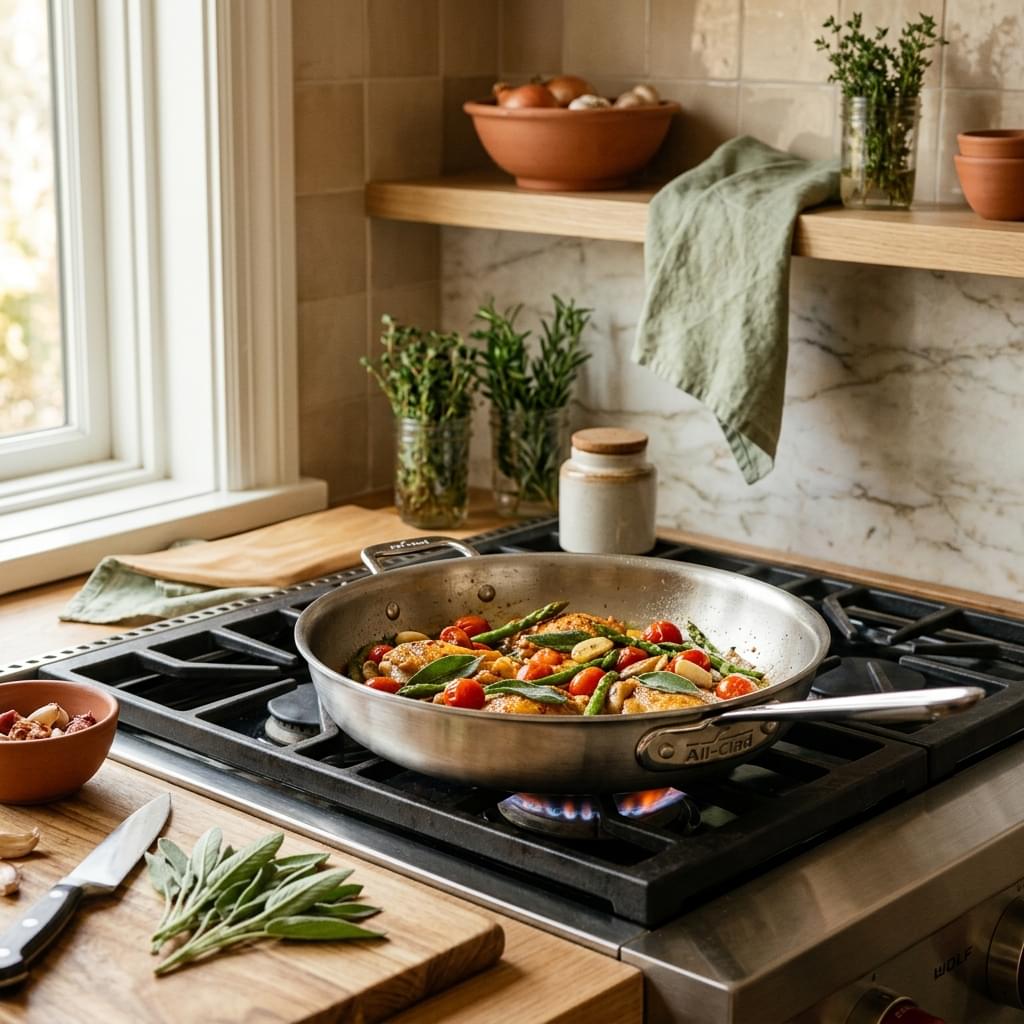
The All-Clad D3 10-Inch Tri-Ply Skillet is our top stainless steel recommendation for beginners, providing balanced aluminum heat distribution, flared drip-free pour rims, and heirloom durability around $120. It delivers 100% non-toxic searing and golden pan sauce fond that never chips, peels, or wears down.
The Non-Toxic Transition: Leaving Synthetic Coatings Behind
Every synthetic nonstick pan has a finite lifespan of three to five years before chemical coatings begin micro-flaking.
Investing $120 in an heirloom stainless skillet actually saves households over $150 across a decade compared to continually replacing short-lived nonstick pans.
Uncoated multi-ply stainless steel contains zero PFAS, PTFE, ceramic Sol-Gel binders, or chemical glazes.
Its cooking surface is pure food-grade 18/10 stainless steel, offering total chemical inertness that lasts decades.
You can sear bone-in steaks under 600°F oven broilers and deglaze rich pan sauces without worrying about coating degradation.
For testing alternative non-toxic cookware surfaces, explore our 5 Best HexClad Alternatives Guide.
The Science of Nonstick Steel: The Leidenfrost Preheating Technique
The number one reason beginners experience sticking in stainless steel pans is inadequate preheating.
When you heat an empty stainless skillet over medium heat for two minutes, microscopic metal pores expand and close.
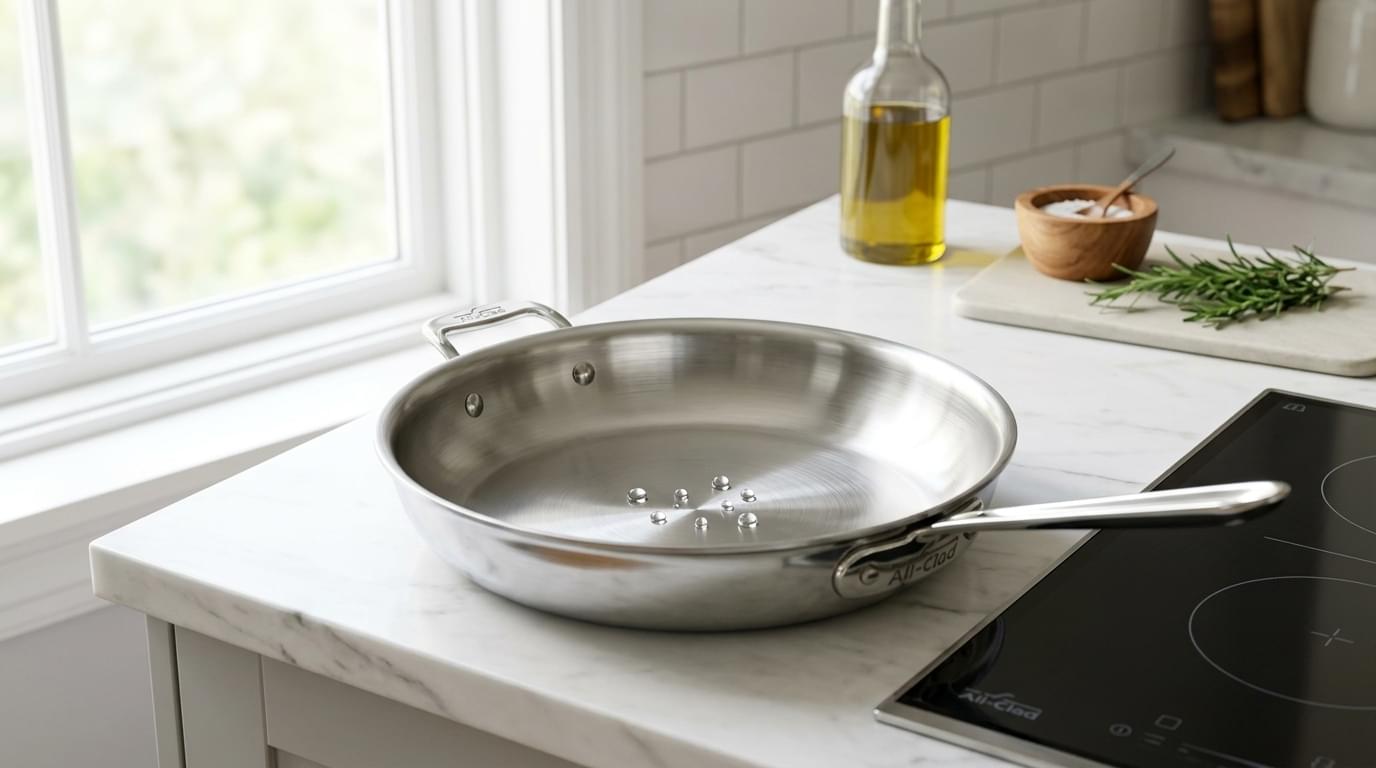
Flicking a few drops of tap water into the pan reveals readiness through the Leidenfrost effect.
If water sizzles and evaporates immediately, the pan is too cold; if water beads into floating mercury-like marbles that glide effortlessly, the pan is perfectly preheated.
Add a teaspoon of butter or high-smoke-point oil only after reaching this temperature, and avoid aerosol cooking sprays whose chemical propellants bake into sticky residue.
Tempering cold eggs in a bowl of warm water for two minutes before cooking prevents cold whites from thermal-shocking the hot pan surface.
To understand how stainless steel handles acidic foods, check our Stainless Steel vs Carbon Steel Wok Guide.
Pan Engineering: Tri-Ply Clad Aluminum Cores vs Disc Bottoms
Beginner cooks should avoid cheap pans with bonded bottom discs, as thin single-ply sidewalls scorch delicate sauces.
Quality tri-ply pans like the All-Clad D3 sandwich a responsive aluminum core all the way up the curved sides.
This continuous metal sandwich eliminates scorching hot spots directly above gas burners and induction elements.
For solo cooks and couples, the 10-inch skillet offers the ideal weight-to-surface balance for morning eggs, while larger families should choose the 12-inch for browning multiple chicken cutlets without crowding.
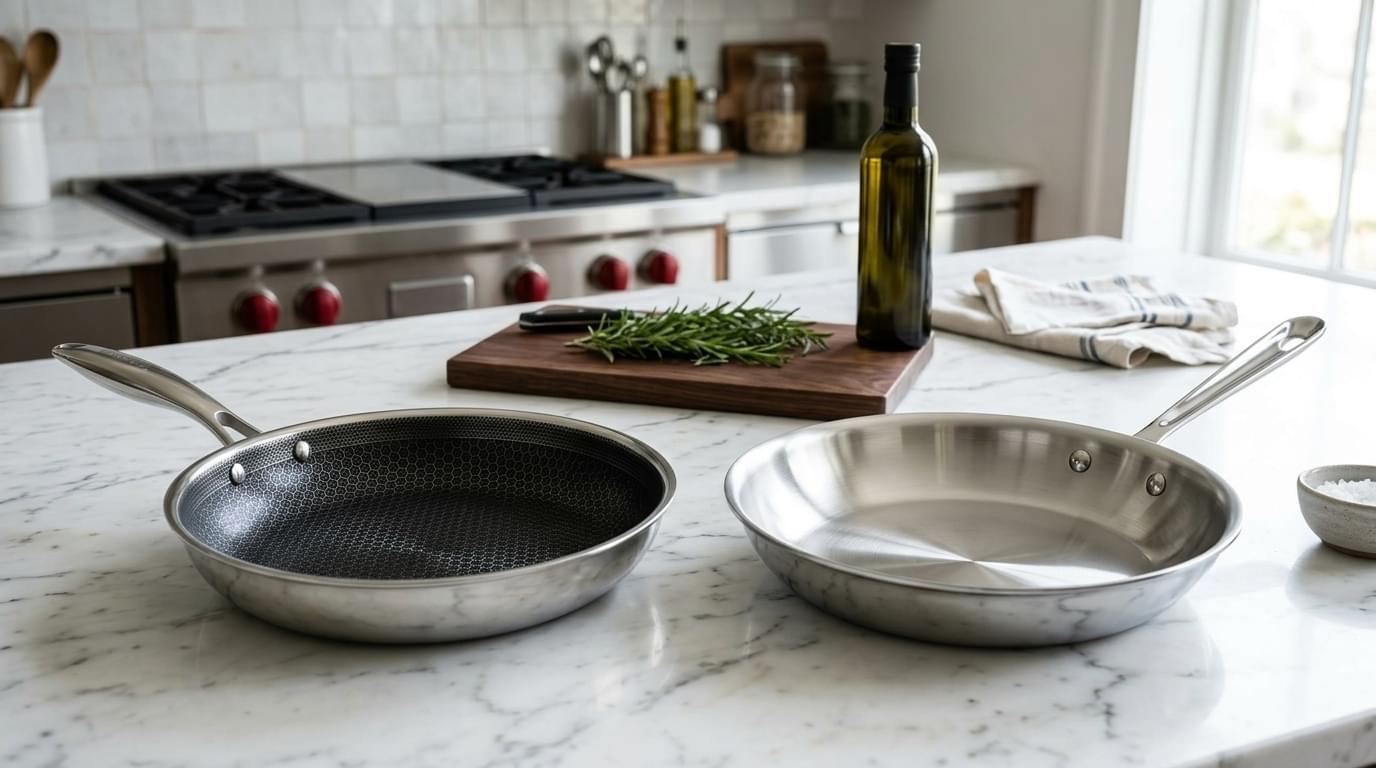
To compare tri-ply steel against hybrid nonstick pans, see our HexClad vs All-Clad D3 Comparison.
Maintenance & Washing: Restoring Mirror Luster Without Stress
Cleaning stainless steel does not require tedious chemical seasoning like raw cast iron.
Deglazing the hot pan with a splash of warm water while still on the stove lifts ninety percent of stuck fond instantly.
For stubborn heat tints or polymerized cooking oil, a small shake of oxalic acid powder (Bar Keepers Friend) restores factory shine in sixty seconds.
Unlike delicate ceramic pans, stainless steel skillets are 100% metal spatula safe and fully dishwasher compatible.
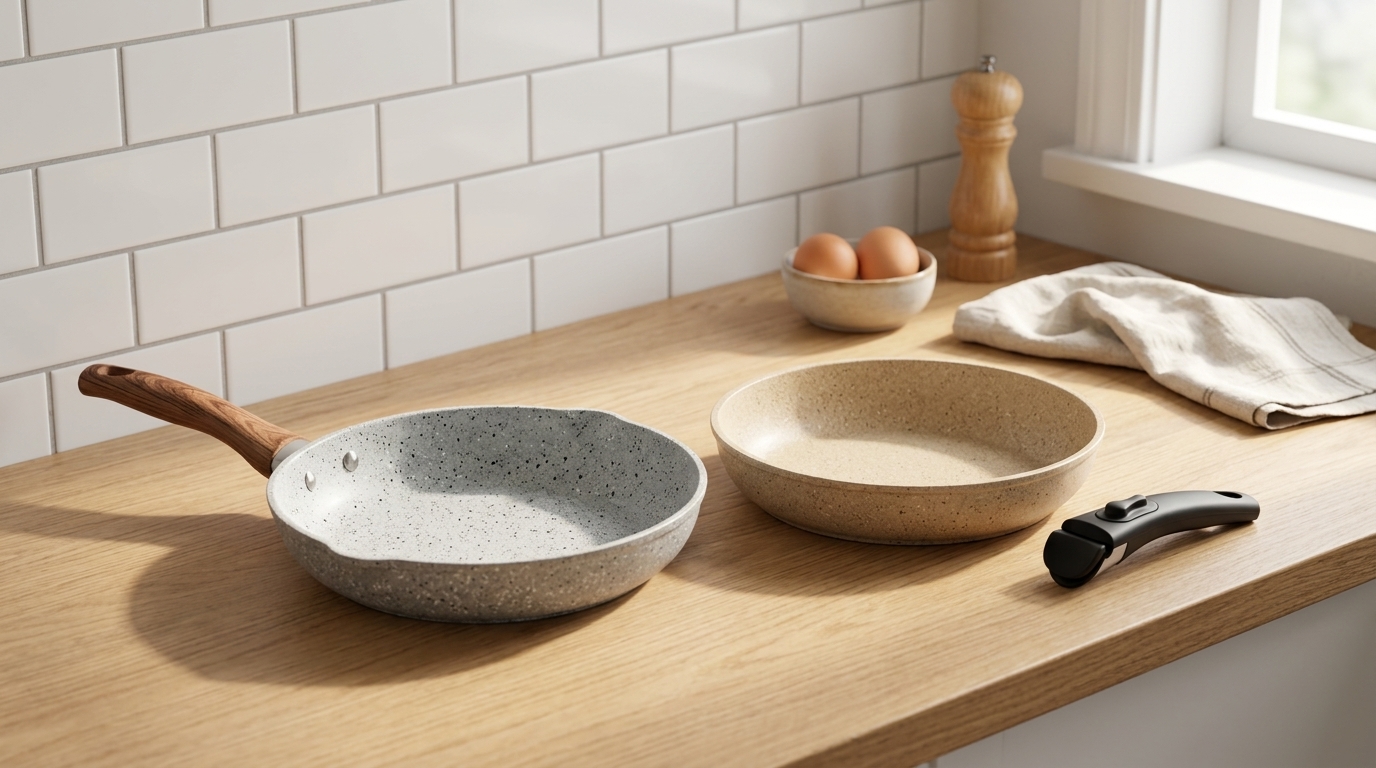
For easy morning eggs while building stainless cooking confidence, review our CAROTE vs Sensarte Crepe & Egg Pan Guide.
Who Is This NOT For?
Pass on stainless steel if you refuse to take two minutes to preheat your cookware and want cold eggs to slide with zero added cooking oil.
If you want low-oil breakfast sliding with zero learning curve, choose diamond ceramic like the GreenPan Valencia Pro in our HexClad Showdown.
If you prefer modular click-lock nesting for compact drawers, consider our Space Saving Cookware Sets Guide.
Expert Answers & Material Science Q&A
How do you cook eggs in stainless steel without sticking?
Preheat the dry pan on medium heat until water droplets bead and glide (the Leidenfrost effect), add butter or oil, reduce heat slightly, then add eggs.
Can you use metal utensils on stainless steel skillets?
Yes, stainless steel has no delicate nonstick coating, making it completely safe for metal spatulas, whisks, and spoons.
Why does my stainless steel pan have rainbow stains?
Rainbow discoloration is a harmless thermal oxidation tint caused by trace minerals in food; it wipes clean instantly with diluted vinegar or Bar Keepers Friend.
Are tri-ply stainless steel pans safe on induction cooktops?
Yes, high-quality tri-ply pans feature a magnetic 430 exterior stainless steel layer that couples efficiently with induction burners.