
The Wok Hei Physics & PTFE Dangers
Achieving authentic wok hei, or breath of the wok, requires stove temperatures exceeding 500°F. At these extreme temperatures, traditional nonstick PTFE coatings degrade rapidly, off-gassing toxic fluoropolymer fumes into your kitchen environment.
Carbon steel is the original non-toxic alternative. It withstands intense thermal shock and searing heat without peeling, providing that signature smoky wok flavor safely.
Carbon Steel Wok Selection & Heat Responsiveness
Choosing the right wok depends on your cooktop type and cooking style. Round-bottom woks are traditional for gas flames, while flat-bottom woks provide essential contact area and stability for induction and glass stoves.
Heavy-gauge carbon steel offers unmatched heat responsiveness, heating up and cooling down in seconds. Consider options like the Yosukata Carbon Steel Wok for authentic stir-fries or the De Buyer Mineral B Carbon Steel Frying Pan for versatile searing.
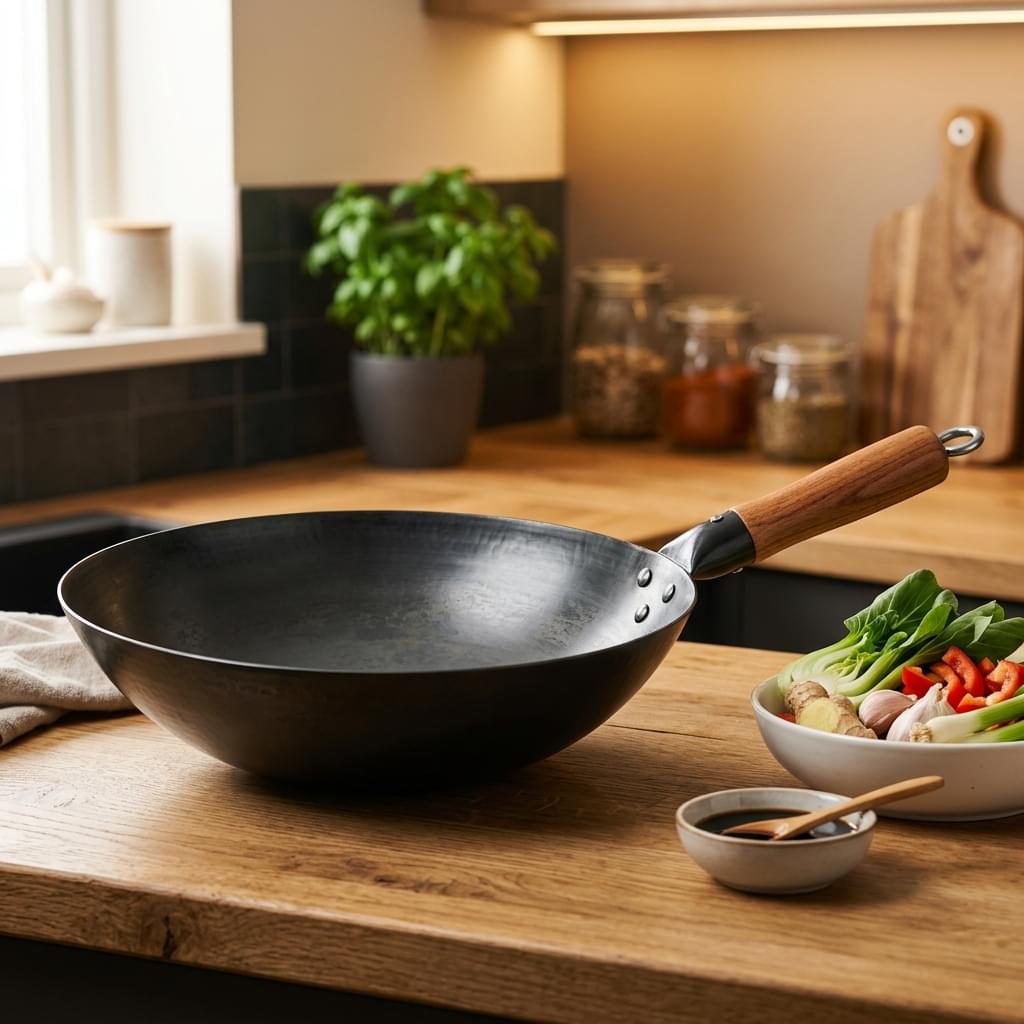
Crafted from high-grade black carbon steel and pre-seasoned at 1000°F, this traditional flat-bottom wok delivers high-heat wok hei flavor without a drop of chemical non-stick coating.
The Initial Seasoning Ritual & Oil Patina Science
Transforming raw carbon steel into a naturally slick nonstick surface requires an initial seasoning ritual. The first step, bluing the steel, alters its surface oxide layer to prevent rust.
Next, applying microscopic layers of high-smoke-point oils like avocado or grapeseed oil under intense heat induces oil polymerization. This process bonds oil to the metal, creating a smooth, dark, non-toxic patina that improves with every meal.
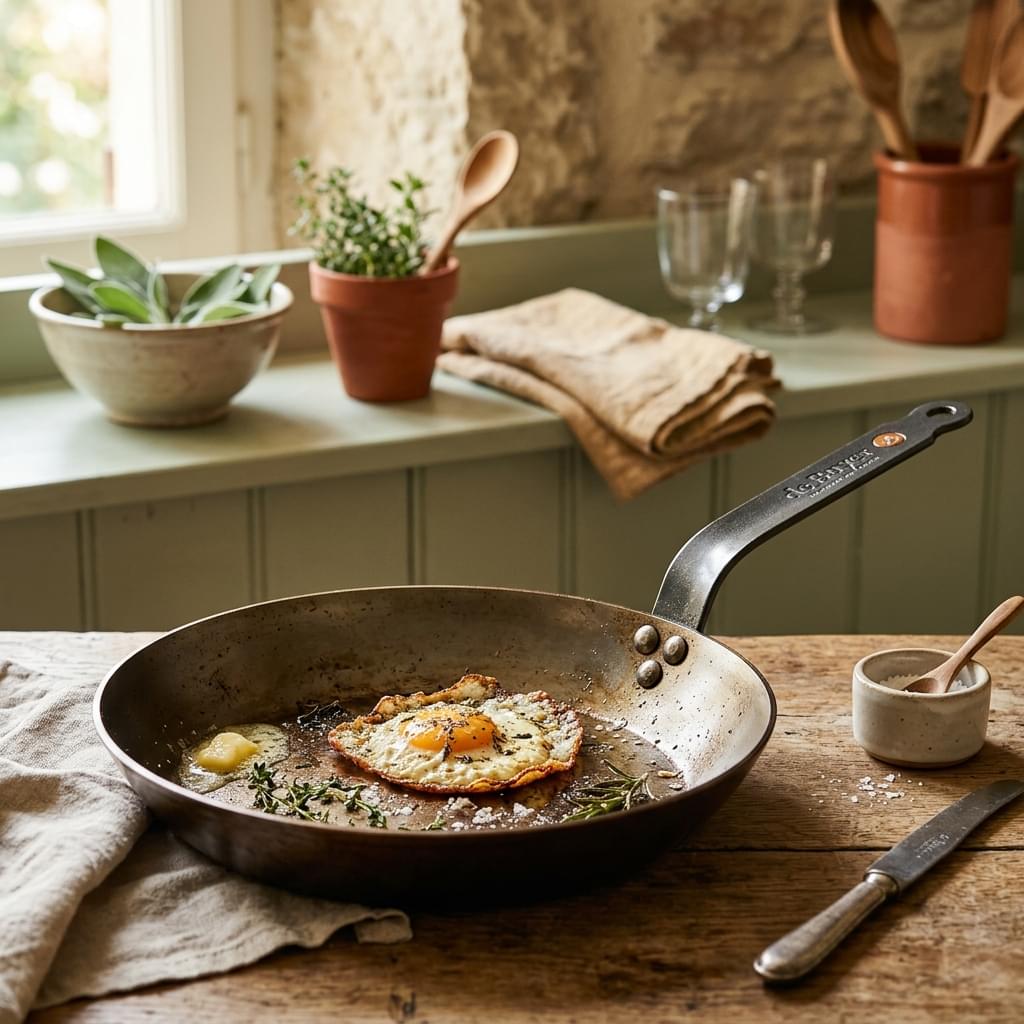
Professional grade carbon steel that becomes naturally non-stick over time. It heats up quickly and can handle extreme temperatures for the perfect sear.
Cleaning, Maintenance, and Re-Seasoning Care
Proper maintenance preserves your wok's natural nonstick patina for decades. Never use harsh dish soap or place carbon steel in a dishwasher. Instead, use a traditional bamboo brush and hot water to gently scrub away residue.
After washing, immediately dry the wok on a warm burner to evaporate ambient moisture and prevent rust. Finish by rubbing a tiny drop of avocado oil over the interior surface before storage.
Heirloom Pan Selector & Cooking Match
Select your cooking habits, weight preference, and care style to find your ideal heirloom pan.
Ideal for quick agile meals, stir-fry tossing, and daily eggs. At just 3.2 lbs, carbon steel heats up rapidly and builds a natural non-toxic oil seasoning patina over time.
How we match the right heirloom pan to your cooking style
| Material | Pan Weight | Best For | Maintenance | Recommended Product |
|---|---|---|---|---|
| Carbon Steel | 3.2 lbs (Light) | Eggs, fish, stir-fry tossing | Natural oil seasoning | De Buyer Mineral B Frying Pan |
| Raw Cast Iron | 5.4 lbs (Heavy) | High-heat steak searing, baking | Natural oil seasoning | Lodge 10.25" Pre-Seasoned Skillet |
| Enameled Cast Iron | 13.5 lbs (Heavy Dutch Oven) | Slow stews, acidic tomato sauce | Dish soap safe, zero oil care | Lodge 6-Quart Enameled Dutch Oven |
Expert Answers & Material Science Q&A
Why is carbon steel preferred over nonstick for wok cooking?
Wok cooking requires extreme heat (over 500°F) for authentic 'wok hei' flavor. Synthetic nonstick coatings break down at these temperatures, whereas carbon steel thrives under high heat.
Can you use a carbon steel wok on an induction cooktop?
Yes, flat-bottom carbon steel woks are magnetic and work exceptionally well on induction, electric glass, and gas stoves.
How do you clean a seasoned carbon steel wok after cooking?
Rinse with hot water and a soft bamboo brush (avoid dish soap), dry thoroughly on a warm burner, and rub a tiny drop of high-smoke-point oil over the interior.
What oils are best for seasoning a carbon steel wok?
High-smoke-point neutral oils like grapeseed, avocado, or canola oil are ideal for building a durable black patina.