The problem with traditional nonstick
For decades, PTFE and PFAS fluoropolymers provided convenient food release. But when heated past 500°F, synthetic coatings degrade and off-gas chemical compounds into your home environment.
Swapping to mineral ceramic coatings like Caraway or GreenPan ensures zero synthetic fumes at high temperatures.
Ceramic vs. Carbon Steel: Which is right for you?
Ceramic sets like the Caraway 12-Piece Ceramic Set and GreenPan Valencia Pro offer effortless release for morning eggs without seasoning routines.
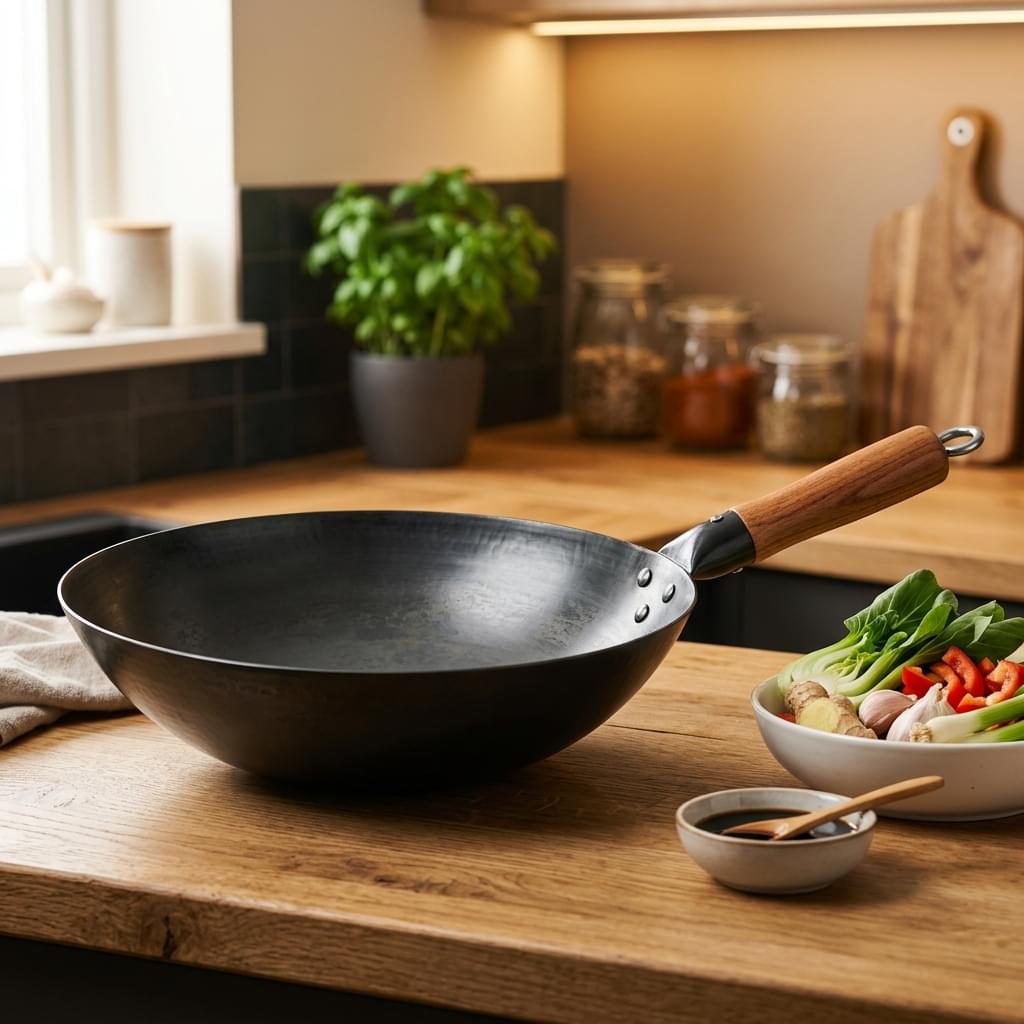
For high-heat searing and lifelong heirloom durability, heavy carbon steel and enameled cast iron like Lodge offer unmatched thermal mass.
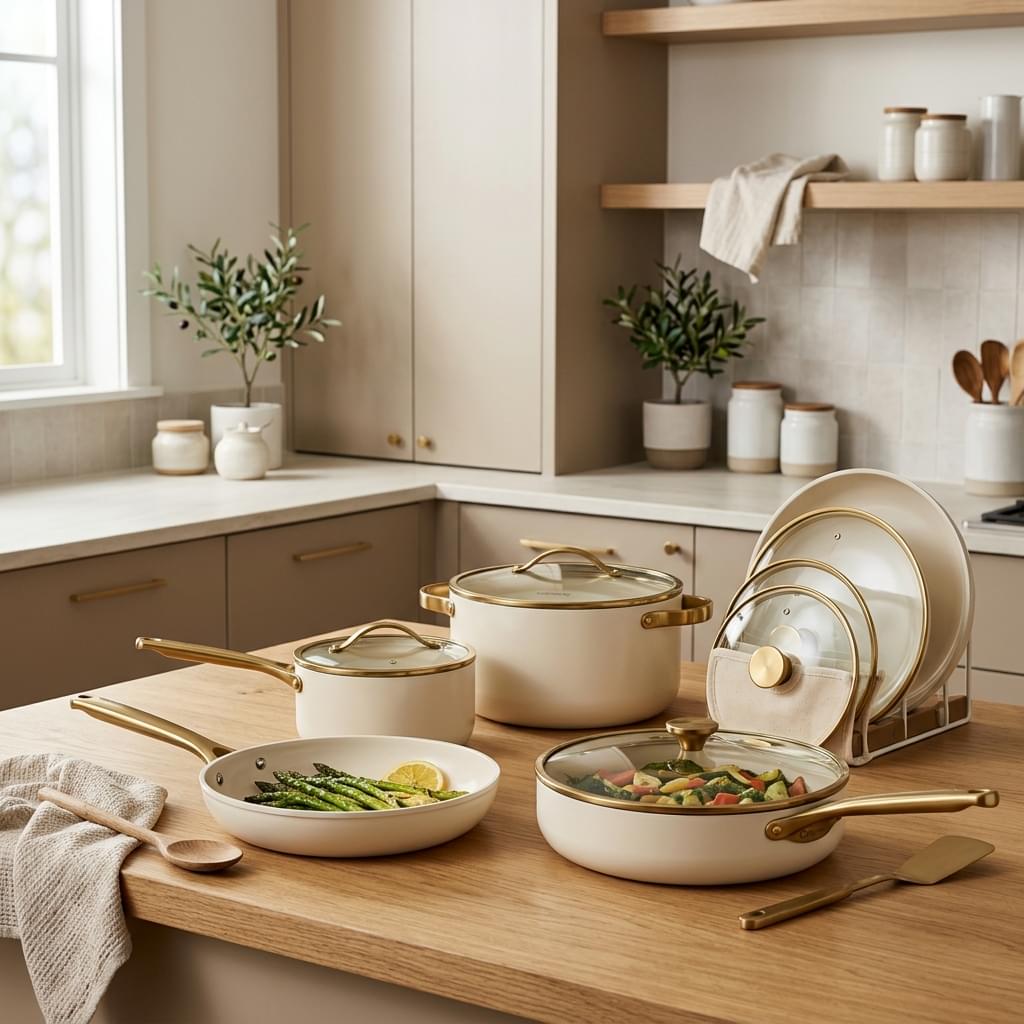
The gold standard for modern aesthetic non-toxic cooking. Caraway's 12-piece ceramic cookware set is engineered with an eco-friendly mineral coating completely free of PFAS, PTFE, PFOA, lead, and heavy metals.
Ditching plastic in grain and food storage
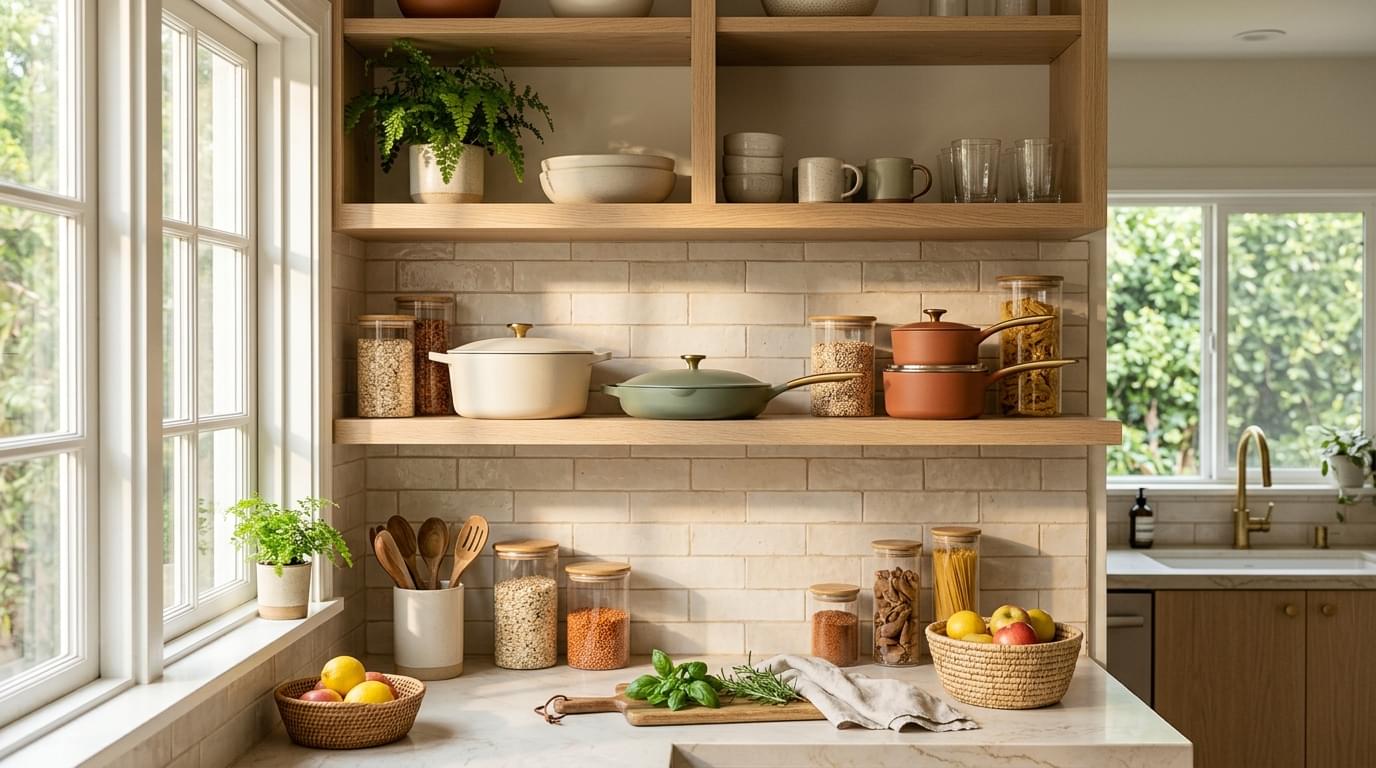
Microplastics leach fastest into foods when stored long-term in soft plastics. Transitioning to borosilicate glass dispensers and JoyJolt glass containers preserves ingredient freshness while elevating pantry aesthetics.
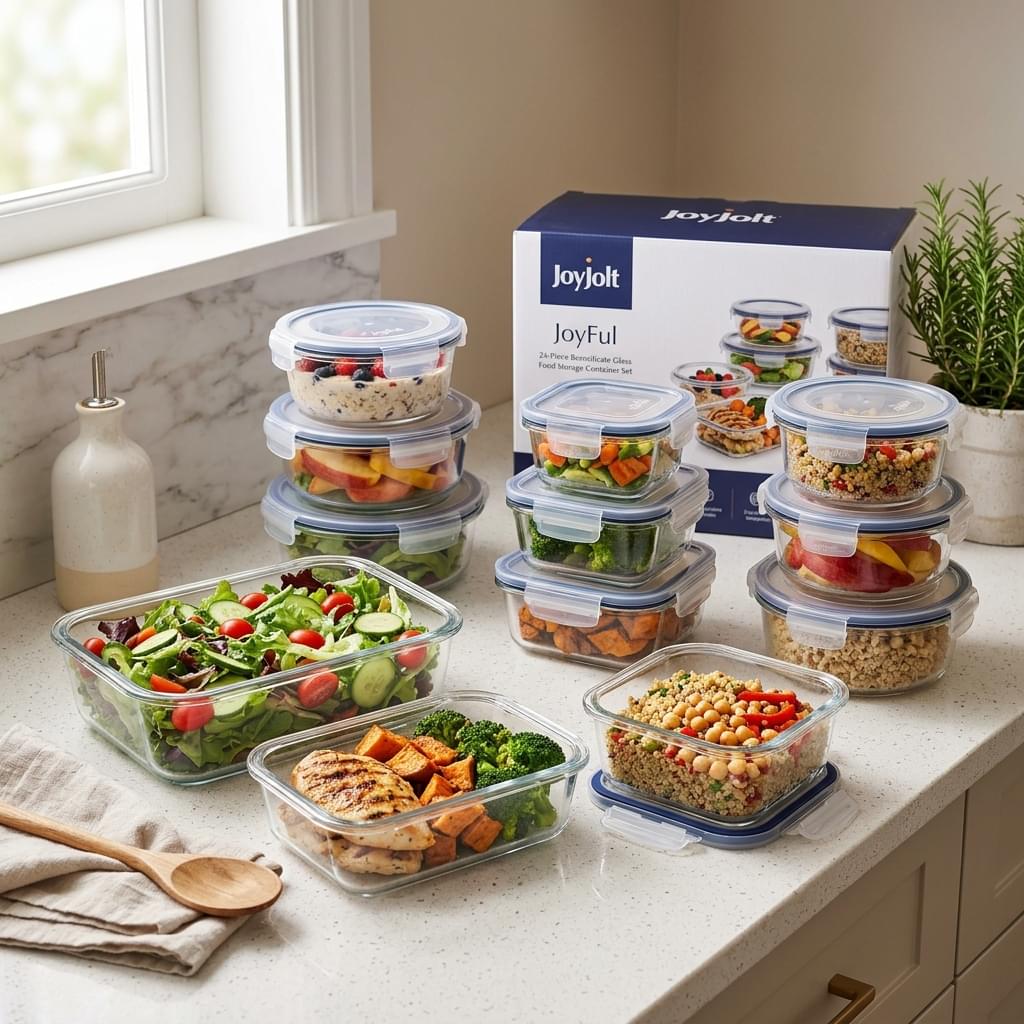
Replace plastic Tupperware with ultra-durable borosilicate glass. JoyJolt JoyFul containers withstand extreme temperatures from oven to freezer without leaching microplastics or chemicals into meal prep.
"Is My Pan Safe?" Non-Toxic Marketing Decoder & Safety Audit
Select your cookware coating label to decode marketing buzzwords, check off-gassing thresholds, and find a safe swap.
Traditional Teflon / PTFE Nonstick
500°F (260°C)
Marketing Decoder: PTFE fluoropolymers degrade when heated past 500°F, off-gassing chemical fumes into indoor air and wearing off into food over time.
Replaces PTFE completely with a natural silica mineral glaze that emits zero toxic fumes at high heat.
How we audit cookware coatings and safety thresholds
| Coating Type | Safety Grade | Off-Gas Threshold | Chemical Composition | Recommended Non-Toxic Swap |
|---|---|---|---|---|
| Traditional Teflon / PTFE | F | 500°F (260°C) | Synthetic fluoropolymers | Caraway Ceramic Set |
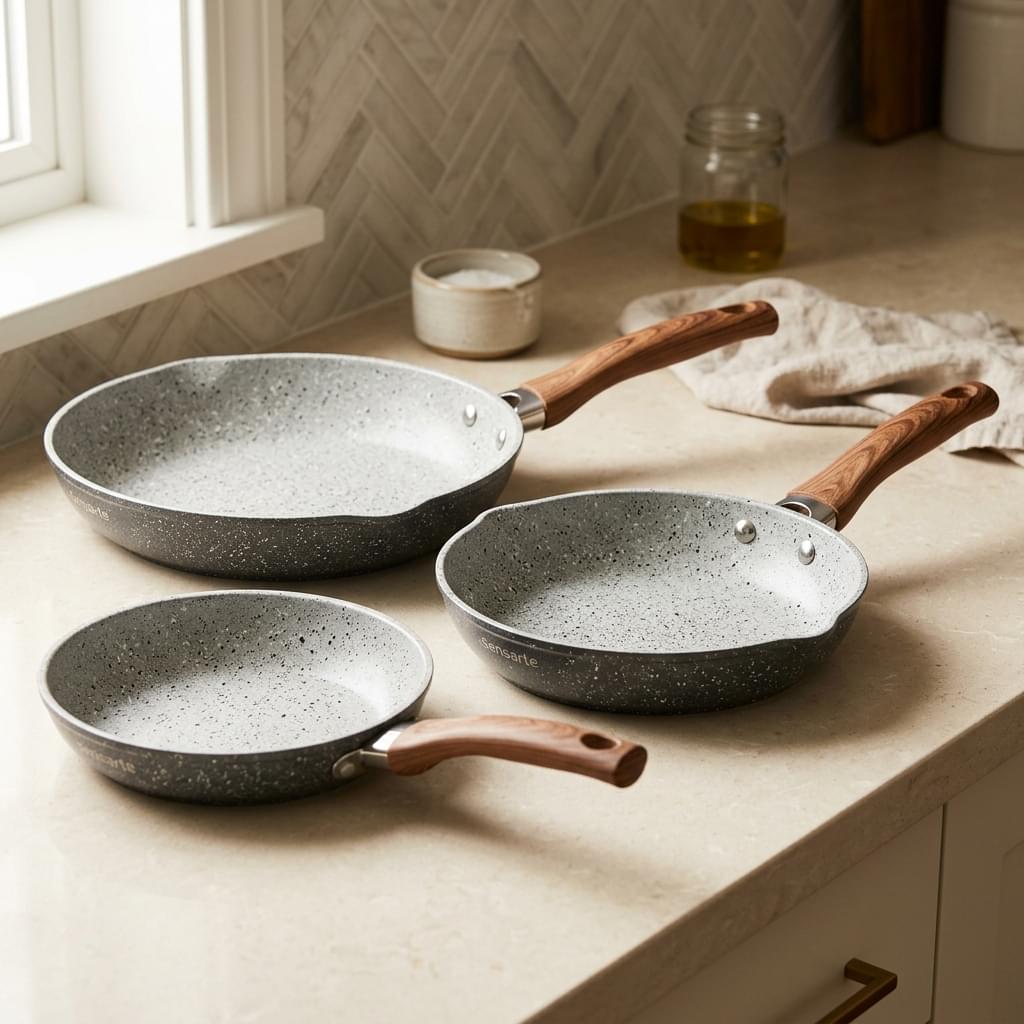
| Speckled Granite / Stone | D+ | 500°F (260°C) | PTFE base with stone print | Sensarte Swiss Granite Ceramic |
| Diamond / Titanium Nonstick | D | 500°F (260°C) | PTFE with diamond dust | All-Clad D3 Stainless Steel |
| Hard Anodized Ceramic | A | 600°F+ (Zero Fumes) | Anodized aluminum + silica glaze | GreenPan Valencia Pro |
| Sol-Gel Mineral Ceramic | A+ | 550°F+ (Zero Fumes) | Sand-derived silica glaze | Caraway Ceramic Set |
| Raw Carbon Steel / Cast Iron | A+ | 1000°F+ (Indestructible) | 100% Seasoned Iron Metal | Lodge Cast Iron Skillet |
Expert Answers & Material Science Q&A
At what temperature does traditional Teflon become unsafe?
Traditional PTFE (Teflon) coatings begin to break down at temperatures above 500°F (260°C), releasing chemical fumes. Mineral ceramics remain stable up to 550°F or 600°F without degradation.
What is the difference between ceramic and carbon steel cookware?
Ceramic cookware features a slick silica glaze for low-maintenance egg and pancake frying. Carbon steel is an indestructible heirloom metal requiring natural oil seasoning for high-heat searing.
Are glass food storage containers safer than plastic Tupperware?
Yes, borosilicate glass containers do not leach microplastics or endocrine-disrupting chemicals like BPA and phthalates into hot food or acidic sauces.
What utensils should be used on mineral ceramic pans?
Always use wood, bamboo, or food-grade silicone utensils to protect delicate ceramic glazes from microscopic surface scratches.